
Penn Researchers Receive Nearly $6 Million in Renewed Funding to Study Epigenetics of Reproduction
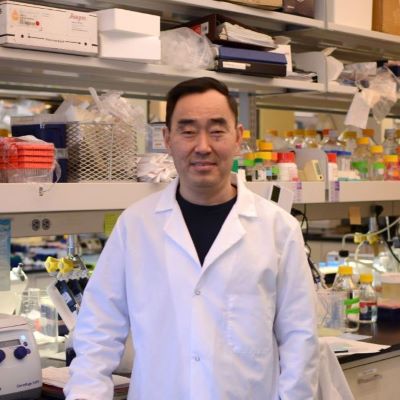
A multidisciplinary group of researchers from the University of Pennsylvania’s School of Veterinary Medicine (Penn Vet) and the University’s Perelman School of Medicine (Perelman) have received $5.95 million in renewed funding from the National Institutes of Health (NIH) to study male and female reproduction in animals and humans.
The funding supports the Penn Center for the Study of Epigenetics in Reproduction (PCSER), which focuses on epigenetic mechanisms that govern male and female reproduction, contribute to male infertility, and impact on development of mouse and human concepti conceived through Assisted Reproductive Technologies (ART). Funded by the NIH since 2011, the PCSER consists of Penn Vet’s P. Jeremy Wang, MD, PhD, Ralph L. Brinster President’s Distinguished Professor, and Perelman’s Marisa Bartolomei, PhD; Monica Mainigi, MD; and Suneeta Senapati, MD, MSCE. Drs. Wang and Bartolomei are members of the Epigenetics Institute.
The renewed funding will support Wang’s investigation of a testis-specific protein TEX15, discovered by his laboratory, which is required for male fertility. Wang’s research program focuses on the cellular, molecular, genetic and epigenetic controls of meiosis, the process of cell division that is unique to germline cells and generates genetic diversity. He seeks to identify abnormal meiosis that are responsible for spontaneous pregnancy loss or human congenital conditions.
Wang is Director of Penn Vet’s Center for Animal Transgenesis & Germ Cell Research. He received his MD from Peking University Health Science Center and his PhD in Molecular Biology and Genetics from Cornell University.
Written by Martin J. Hackett. Reposted from Penn Vet News. Link to original article: https://www.vet.upenn.edu/about/news-room/news-stories/news-story-detail/penn-vet-and-penn-medicine-researchers-receive-nearly-6-million-in-renewed-nih-funding-to-study-epigenetics-of-reproduction-in-animals-and-humans